
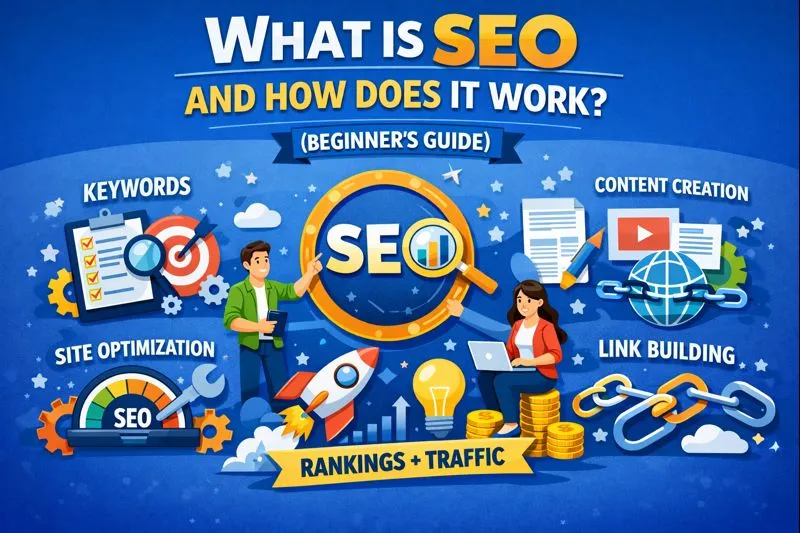
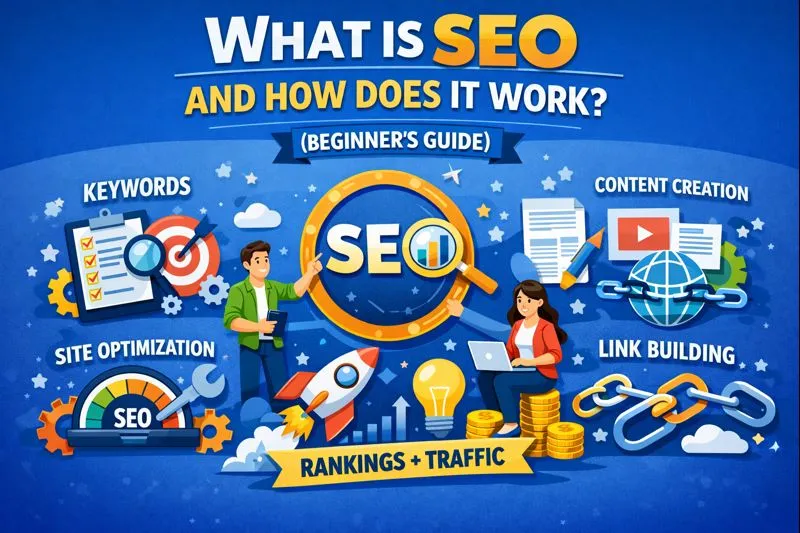
Search Engine Optimisation (SEO) is a practice to enhance your website’s visibility, qualityand traffic from different search engines like Google, Bing, etc, in an organic(unpaid) way.
This practice involves optimising content, structures, and links to increase visibility to attract more traffic to the website. For many businesses, SEO still feels difficult to understand and feels Complex.
In this beginner’s guide, we will understand what is SEO, how it works, and why it matters in a clear way, so everyone can understand it.
Table of Contents
What is a Search Engine & How Does it Work?
Before understanding SEO, it’s essential to first know about the Search Engine.
A Search Engine is a software that we go to search, discover, and collect information
from the internet on specific queries. Some examples are Google, Yahoo, and DuckDuckGo.
When you type a particular query or keyword into a search engine, it redirects you to the SERP
(Search Engine Result Page) that contains different relevant answers to your query.
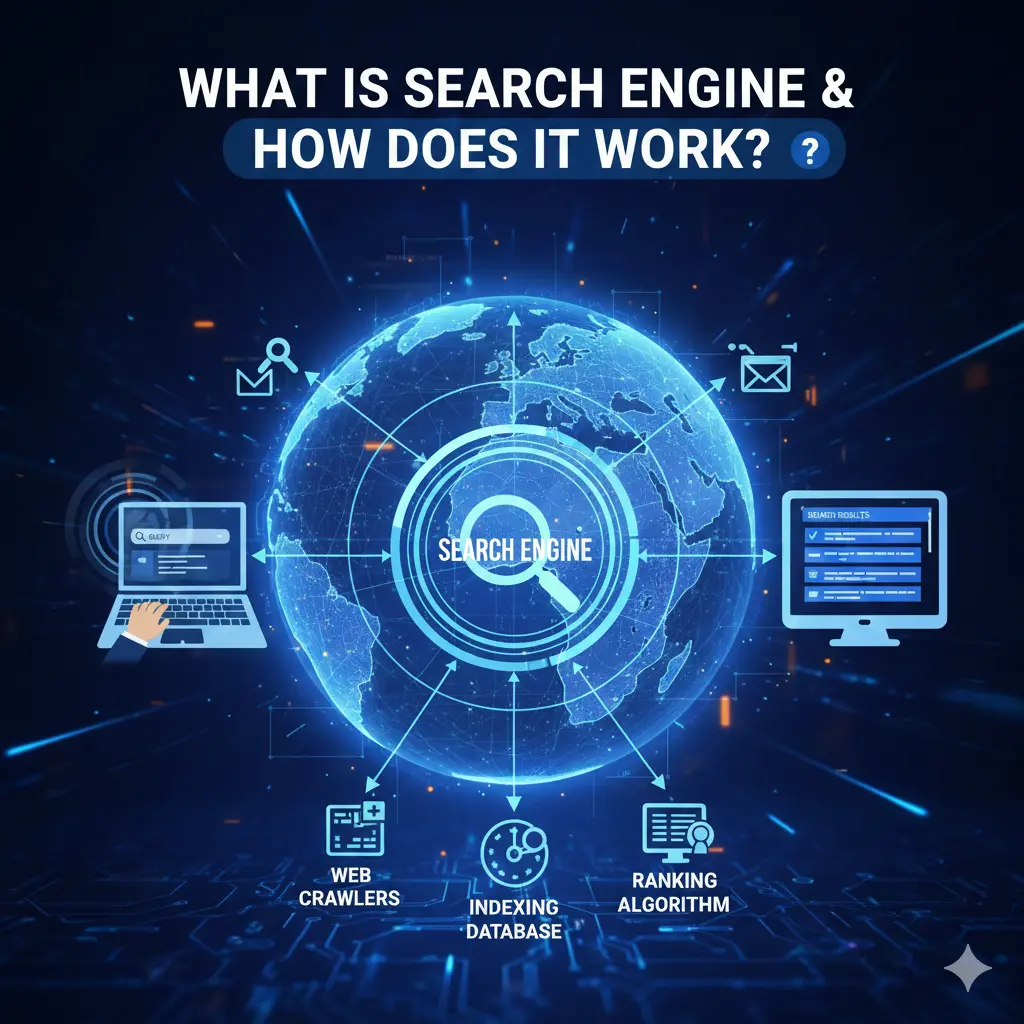
Search Engine works as a process of three main steps:
1. Crawling
This is the first step where a search engine uses a bot (called a crawler) to discover new and updated web pages to collect information and data such as links, page content, etc.
2. Indexing
After the crawler completes crawling, the crawled data is collected and organised in a database called an index. Pages that are indexed become eligible to appear on the SERP.
If a page is not indexed, it cannot rank on the SERP.
3. Ranking
Ranking appears in the order in which indexed web pages appear on the search engine result page(SERP). This ranking is based on algorithms like content relevance, quality, originality, backlinks, and domain authority.
What is SEO?
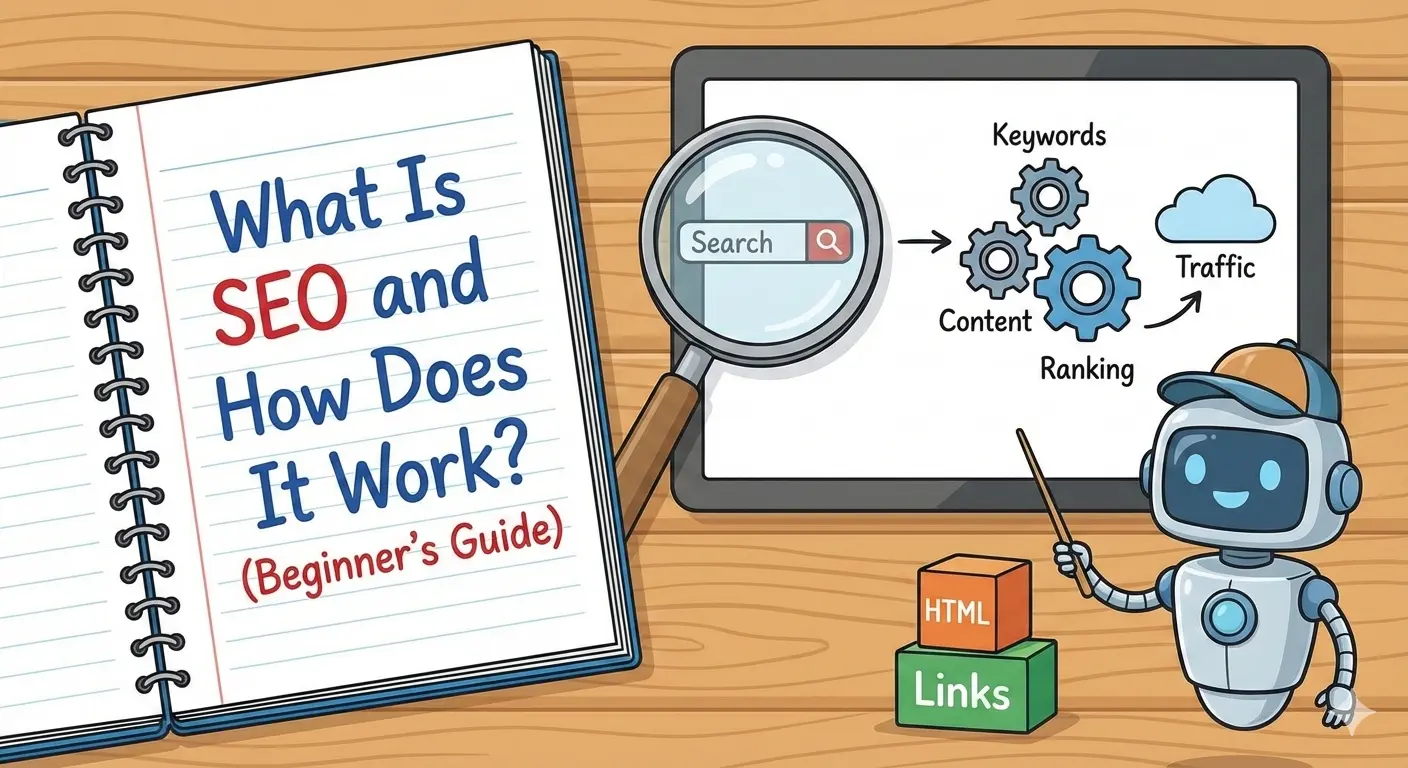
SEO (Search Engine Optimization) is an activity of improving a website’s presence and increasing traffic in organic results for dedicated keywords related to your business.
In a simple way, SEO helps your website appear first or rank better when potential customers search for services that you offer, above your competitors.
The goal is simple: Get more organic traffic from search engines.
It focuses on earning visibility by focusing on the relevance, authority, and trustworthiness ofsearch engines through maintaining algorithms. Not like paid advertising, where visibility is purchased.
Why SEO is Important?
In the current digital world, modern buyers research before going to purchase any product or service.
Everyone’s journey starts with a search engine with related queries.
Here’s why it really matters:
- Organic traffic is sustainable and long-term.
- Attract high-end users as they trust organic results rather than paid ones.
- Builds trust: when websites rank on the first page of a search engine, it seems to be more trustworthy.
- It leads to targeting the right audience, users who are searching for a keyword, and targeting matches. This means better leads, not random scrollers.
- Cost-Effective Marketing: Like paid results, seo does not charge per click. Means the highest and long-term ROI. Continuous traffic once rankings are achieved, as it works 24/7.
- In a competitive market, SEO is not optional; it’s essential as it helps you to outrank competitors and capture market share.
- This practice helps you to capture other marketing channels: Content marketing, Email marketing, PPC campaigns, and support Digital Marketing.
- It also allows you to track: traffic growth, conversion rates, and user behaviour, which ultimately helps you make strategies and maximise results.
How Does SEO Work?
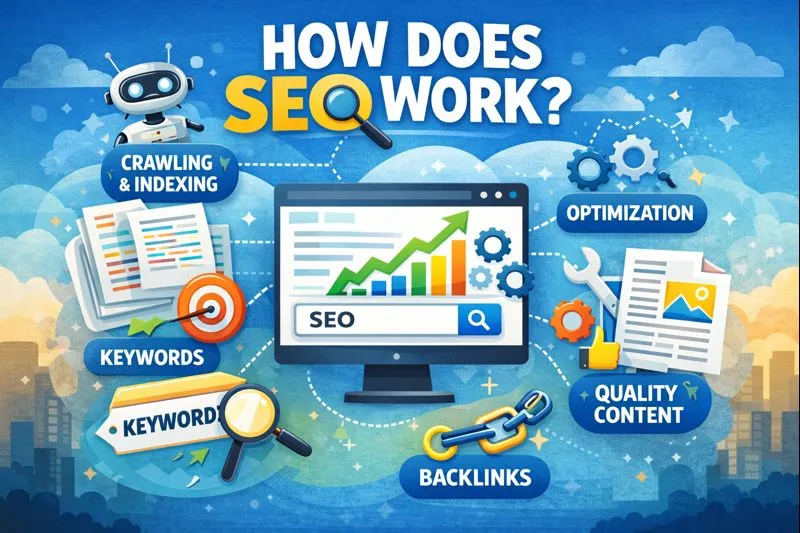
It works by analysing different aspects of a website because it is not a single activity.
It is a systematic process that stands on three main pillars:
1. On Page SEO: Optimization
On-page focuses on elements that happen within your website. You have complete control over these elements. You can work to improve these factors over time.
On-page components include:
- Strategic placement of keywords.
- Implementing meta titles and descriptions.
- Optimizing headings hierarchy (H1, H2, H3, H4)
- High-quality, original content.
- Adding Internal and External links.
- Alt tags and optimized images.
On page is less about keyword repetition and more about aligning the search intent of the user. Is your content able to directly answer the questions users are searching for clearly and accurately?
Strong On-page SEO helps to improve rankings and conversion rates quickly.
2. Off-Page SEO: Building Authority and Trust
Off-Page covers all tactics that take place outside of your website. It is often considered just to build links, but there are more tactics that you should use to gain a competitive advantage.
Tactics such as brand building, content marketing, social media, and more all play an important part of the strategy.
Search engines use external signals to determine whether a website is credible and
authoritative.
Off-Page Factors include:
- High-quality backlinks from reputable websites.
- Brand mentions on trusted platforms.
- Online reputation and reviews.
- Strong social media signals.
Backlinks act as approvals; quality outweighs quantity. A few backlinks from Authoritative sites are always valuable than hundreds of low-quality sites.
Effective Off-Page practices build pillars for your website. As it strengthens authority and helps to compete in the market.
3. Technical SEO: Performance and Accessibility
In this process, we optimize the technical aspects of a website. It focuses on ensuring that the website is faster, secure, and more user-friendly.
This helps search engines crawl and index.
Technical elements include:
- Mobile responsiveness.
- Secure HTTPS Protocols.
- Page speed optimization.
- Sitemaps and robots.txt.
- Fixing broken links.
Even if your content is pure different, it may struggle to rank if the technicals are weak.
Content and SEO: A Strategic Relationship
As content is the foundation of SEO, not all content contributes to growth.
A high-performing SEO content is:
- Well structured.
- Intent-driven.
- Designed to guide users to take action.
- Updated regularly.
A content can perform better if it demonstrates expertise and satisfies search intent more effectively.
How Long Does SEO Take to Work?
SEO is a long-term investment, and timelines depend on competition, industry and quality of execution of the content.
But you may take typical expectations as:
- 0-3 months: Technical fixes, content updates, and indexing.
- 3-6 months: Noticeable increase in traffic, keywords ranking, and visibility improvements in SERPs.
- 6-12 months: Significant traffic growth and consistent lead generation.
SEO results change over time, as they derive from organic data.
Common SEO Mistakes
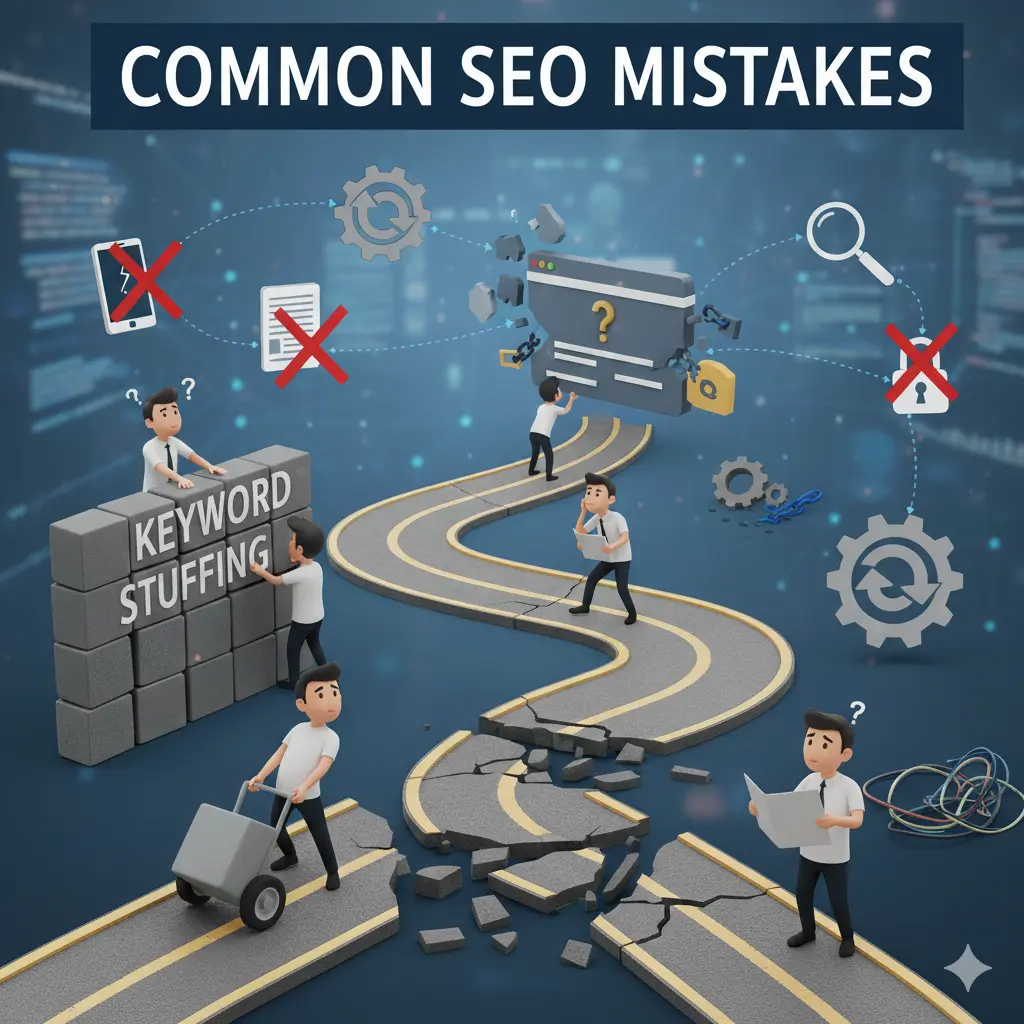
After gaining good knowledge, many businesses make the same mistakes:
- Treating SEO as a one-time project.
- Expecting instant results.
- Measuring success only by traffic.
- Using outdated tactics.
- Ignoring technical performance.
- Poor internal linking.
- Not focusing on search intent.
Failures usually result from bad strategy and poor execution, not from alone SEO.
Final Thoughts
SEO is not a one-time shortcut. It is a long-term discipline activity that rewards consistency and expertise.
SEO is one of the most powerful and cost-effective growth channels available online.
Working for you 24/7.
Ready to Build a Growth Strategy That Delivers Real Results?
At Boosthivedigital, we help businesses design SEO strategies that connect visibility with real Business outcomes that align with scalability and higher ROIs.
Let’s have a chat for a tailored strategy that builds long-term growth.
Also Read – The Shocking Rise of AI-Generated Brand Identity
[…] Also Read: What Is SEO and How Does It Work? (Beginner’s Guide) […]